






Signs your alcohol or drug use requires professional treatment
Are changes in your behaviour, relationships or health indicating that your alcohol or drug use needs professional treatment?
If you are wondering whether your recreational use of alcohol or other drugs has begun to cross the line from fun to problematic, and you’re asking yourself the question, “do I really need treatment”, then read on to discover if you have an addiction problem that needs treatment – and how to find the best substance abuse rehabilitation centre in Johannesburg.
Am I an addict or alcoholic?
Globally, “n estimated 31 million people who use substances suffer from substance dependency… The prevalence of substance use disorders is twice the global average”.
Change your life today!
“The drug problem in South Africa remains very serious,” according to Dr David Bayever from South Africa’s Central Drug Authority. He said that at least 15% of South Africans have a drug problem “and we are only dealing with what we know about…this is only the tip of the iceberg”.
You may have been told by your friends or loved ones that you have a drug or alcohol problem. A doctor may have diagnosed you as having a substance problem. But, in order for you to benefit from treatment, only you can decide whether or not you are an addict.
Thank you to everyone at Changes who helped my daughter through this difficult time. They not only helped her but kept in constant contact with me, updating me on her progress and checking up on how I was doing.

Omw!!! I have absolutely no idea how to express my gratitude! My son initially went to another rehab. They couldn't contain him there and he was sent to a state hospital, where he was restrained.
Embracing sobriety seemed impossible until Changes. The compassionate team led by Sheryl has been a blessing. My journey to recovery found its cornerstone here. Forever indebted.

Dropped our loved one in the safe hands of Changes Northcliff 2 years ago. We are forever grateful for the transformation we have experienced. The facility is receptive and staff are professional and compassionate.
Came out of Changes Rehab on Tuesday. Best decision I could have ever made. After looking at other rehabs, this was my choice. The whole experience and program were top class. Extremely professional team.
Am I an addict?
Click here to be directed to a useful list of questions to answer to understand if you have an addiction problem that could benefit from treatment.
However, there is a list of criteria that medical professionals use to diagnose addiction, or what is known as a ‘substance use disorder’ in the medical community. The following list of 11 criteria is contained in the fifth edition of the Diagnostic and Statistical Manual of Mental Disorders (DSM 5) – which is the gold standard resource used by doctors treating mental health conditions.
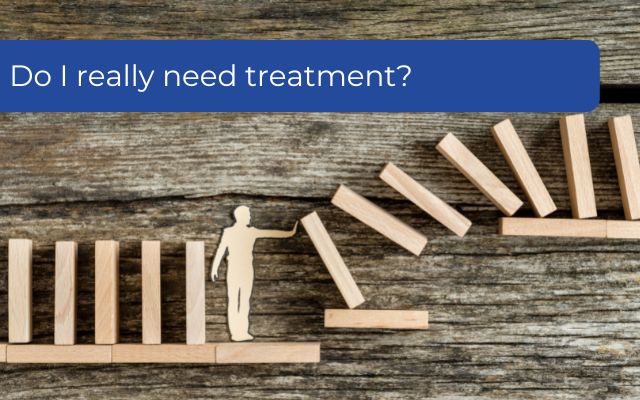
So, do I really need treatment?
You may be an addict or alcoholic if you:
- Use the substance in larger amounts or for a longer period than intended
- Want to cut down or stop using the substance, but are not managing to do so
- Spend a lot of time getting, using or recovering from using the substance
- Experience cravings for the substance
- Are unable to manage commitments due to substance use
- Continue to use, even when it is causing problems in relationships
- Give up important activities because of substance use
- Continue to use, even when it puts you in danger
- Continue to use, even when physical or psychological problems are made worse by substance use
- Experience increasing tolerance towards substance
- Experience withdrawal symptoms
Meeting 2 – 3 of these criteria indicates a mild disorder, meeting 4 – 5 indicates a serious disorder and meeting 6 or more indicates a severe disorder.
It helps many people admit they have an addiction when they realise that it is classified as a disease or a disorder and not as a moral failing. Addicts are sick people who may have done bad things to maintain their addiction: They are not bad people.
Do I need treatment?
It’s difficult to accept that you or a loved one has an addiction problem. But once you have honestly admitted that there is a problem, you have already taken the first and most important step towards recovery. The next step is how to get – and stay – clean and sober.
Some people try quit on their own but many need professional help, this is especially true if you need medically-assisted detox for symptoms of withdrawal.
If you have tried and failed to quit by yourself then you should consider admitting yourself to a treatment facility. There is no shame in not being able to quit on your own. Trying and failing to stop using drugs or alcohol is one of the main symptoms of the disease of addiction.
Many people ask: Is my addiction bad enough for rehab? The answer is any addiction is ‘bad enough’ if it is causing problems in your life.
In fact, the latest medical advice recommends individuals seek treatment sooner rather than later.
Because “substance use disorders develop over time, with repeated episodes of misuse, it is both possible and highly advisable to identify emerging substance use disorders while they are mild or moderate, and to use evidence-based early interventions to stop the addiction process before the disorder becomes more chronic, complex, and difficult to treat”.
There is always help and there is always hope and help available. Changes Rehab Johannesburg is here to guide and support you through each step.
Call 081-444-7000 or email [email protected] to get the help you need today.
Do I really need treatment for alcohol or substance use when changes in behaviour, work or relationships show recreational use is causing real harm now. Changes team counsellors are here to help you.Do You Really Need Treatment For Alcohol Or Substance Use